
Two wishes, one wall
Most remodel calls we take in Duarte begin with one of two wishes. Either the fireplace looks tired, orange brick from the 1960s or a glossy tile face from the 1980s, and the owner wants it refaced. Or the fireplace barely warms the room and the owner wants a gas insert. Often it is both, and the real question is which to do first.
Our short answer: plan them together, build them in the right order. Here is why, and what each job does on its own.
What refacing changes
Refacing replaces the face of the fireplace and leaves the firebox and flue where they are. We cover or remove the old brick, tile or plaster and put up a new finish, often with a new hearth and mantel at the same time. Finishes we fit most often in foothill homes:
- Ledgestone veneer, for a rough, layered face that catches low light
- Large porcelain panels that read like one slab of marble or travertine
- Smooth plaster or limewash over the old brick, soft and matte
- Handmade zellige tile as a narrow band around the opening only
- A new mantel shelf, anything from a reclaimed beam to a thin blackened steel ledge
Refacing changes how the room looks. It does nothing for warmth. An open masonry fireplace sends most of its heat up the flue, and a new stone face cannot change that.
What an insert changes
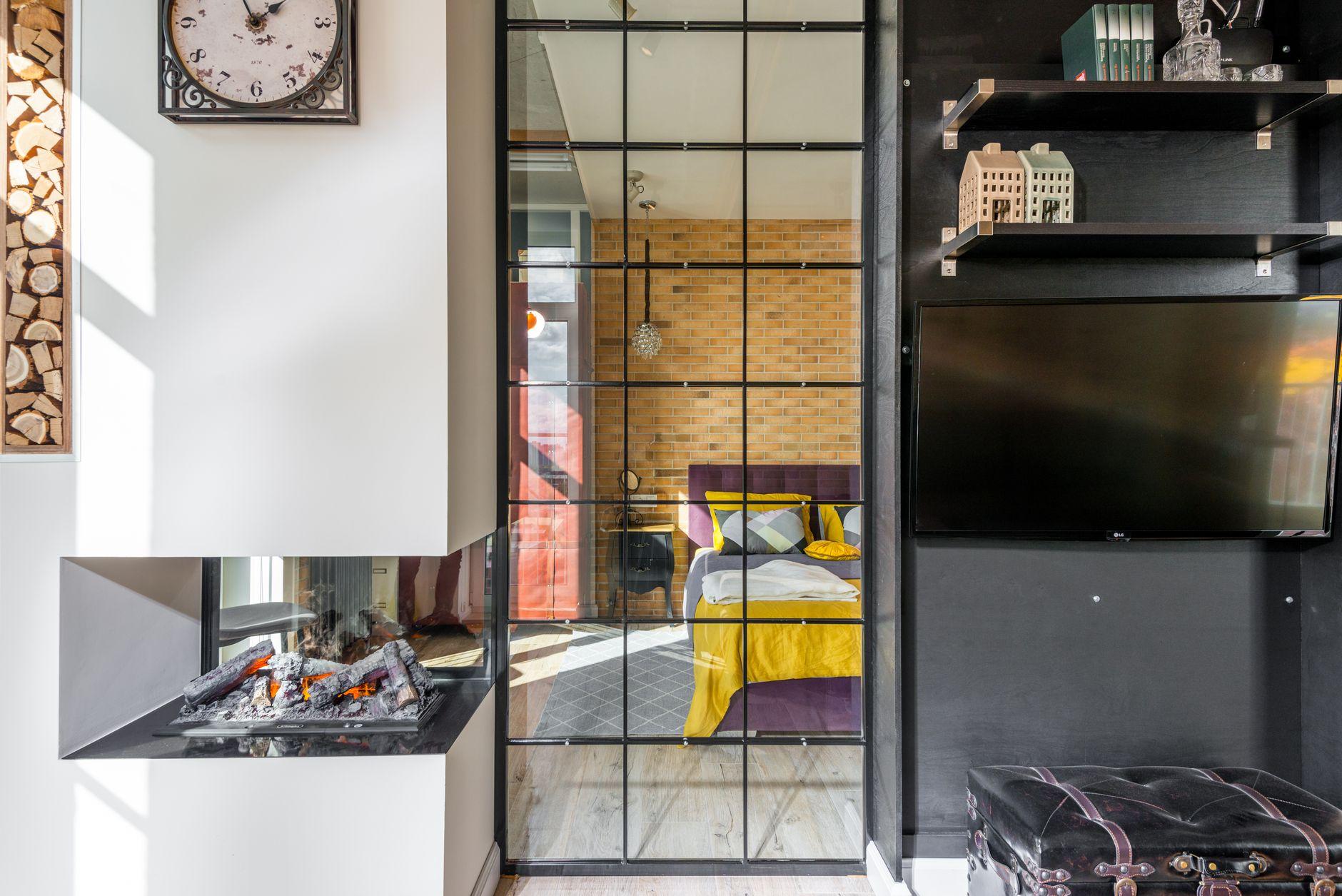
An insert changes the heat. A sealed gas or wood unit sits inside the firebox, vents up the chimney through its own pipe, and throws warmth into the room instead of up the stack. It also changes the opening, because the insert brings its own frame and trim panel, and those sit in front of whatever face is there.
That is where the order matters.
Why the insert sets the size of the face
An insert's trim panel comes in fixed sizes. It has to overlap the face around the opening so no gap shows. Reface first and fit the insert later, and the new stone may end too close to the opening, or the panel may hide a band of the tile you chose with care. We have seen good stonework cut back with a grinder so an insert would fit, and nobody enjoys paying twice for the same wall.
Clearances follow the same logic. Every insert manual gives distances for how close a mantel, a shelf or wood trim may sit above and beside the unit. Choose the insert first, and the mantel height and the width of any wood trim follow from that page. Choose the mantel first, and you may learn the insert you wanted cannot sit under it.
So on a combined job the usual order runs like this: camera the flue, pick the insert and get its figures, design the face and hearth around them, set the insert and its venting, then build the face. On site the insert often goes in before the stone, and the stone is built up to its frame.
When refacing alone is enough
Not every fireplace needs an insert. If you light a fire for the glow on a few winter evenings, or the opening already holds gas logs you like, refacing can be the whole job. It is also the lower cost of the two. We still look at the firebox and damper while we are there, since a fresh face around a cracked firebox panel or a damper that will not shut is money in the wrong place.
When an insert alone is enough
If you like the brick, the insert can go into the opening with only its trim to change the look. Some owners pick a trim in a dark bronze that sits quietly against old brick, and the fireplace looks much as it did, only warmer. Our gas inserts run $2,950 to $5,950 installed.
How we price the pair
The insert has a published range, $2,950 to $5,950, set by the unit, the venting and the gas line. Refacing has no fixed price: the area of the face, the material, the hearth and the mantel differ from house to house, so it goes on paper after we measure the wall. On a combined job both sit on one written quote, in the order we would build them, so you see what each piece costs and can drop or add parts before you decide.
Ask for one quote that covers the insert and the new face
On the form, say which finish you have in mind and whether gas reaches the hearth now. We call back to book the measuring visit.
Before either job: the chimney
Both jobs lean on the chimney. An insert vents through it, and a refaced wall hides it behind new stone. If the flue tile is cracked or the crown lets water in, it is far cheaper to know before the face goes up. That is why we run a camera first on any remodel in Duarte and the towns around it, a Level 2 at $415. Our post on a Level 2 before your remodel explains what it turns up.
See the fireplace remodel page for the finishes we work with, the fireplace inserts page for the units, and gas insert cost in Duarte for what moves the insert figure.
Where to begin
If you are torn between the two, start on the contact page. Tell us what bothers you about the fireplace now, the look, the heat or both, and we will plan a visit to measure and quote.
Planning a Remodel Like This One?
Sweeney Chimney Group works from Duarte across the foothill and valley cities nearby. We measure the opening, check the flue, then draw the new face and price it line by line.